
Collect Your Digital Impressions Automatically: 4 Methods Compared
Every morning, the same routine: open three, five, sometimes eight manufacturer portals to go and fetch yesterday's impressions. Collecting your digital impressions automatically stops being a convenience once a laboratory handles dozens of cases a day. But the four available approaches are not equivalent. Here they are, compared on what counts day to day: time, errors, data security and the ability to grow.
Why receiving impressions became a production problem
Digital impressions have become the norm in the dental practice. According to Mordor Intelligence, the intraoral scanner market is growing at around 11% a year through 2031. More broadly, Fortune Business Insights expects digital dentistry to double in size by 2034. In practical terms: your dentists are scanning more, each on their own brand of camera.
And the number of brands keeps growing. New scanners arrive every year, each with its own proprietary cloud. So the problem is not only case volume: it is the variety of sources. Even a laboratory with flat volume watches its handling load climb as its dentists equip themselves with different brands.
The bottleneck has moved. It no longer sits in taking the impression but in handling it: fetching the file, identifying it, filing it, re-keying it into the lab management system. France counts 3,600 dental laboratories and close to 18,000 people working in them. The sector consolidates year after year. All of them live with the same tension: an inbound flow scattered across platforms that do not talk to each other. How you collect those impressions decides part of your margin.
That handling carries a hidden cost. A misfiled impression is a case you hunt for instead of producing. A case left sitting in a portal is a deadline that slips and a dentist who loses patience. Multiplied by the number of cases in a week, that time eats into profitability without ever appearing on an invoice.
One more constraint, still underestimated in many laboratories. A digital impression identifies a patient: in law, it is health data. Receiving it and storing it therefore fall under certified hosting rules and the GDPR. The collection method you choose is not only a comfort question: it commits your compliance too. Holding both criteria together, productivity and security, is what lets you compare the four methods on one grid.
Method 1: Logging in to manufacturer portals by hand
This is the default situation. Each manufacturer pushes its own cloud. Medit Link handles Medit cameras, 3Shape Communicate the TRIOS, the iTero portal belongs to Align, and DS Core covers the Dentsply Sirona world. You log in to each one, collect the cases one by one, then file them by hand.
And these portals are not equivalent. Medit Link exports STL files fairly freely. 3Shape Communicate does carry cases, but working with them requires a 3Shape Dental System or Unite license and the STL export option enabled on the dongle. Download rights vary from one manufacturer to the next, which makes collection harder still.
The mechanism is simple, but the cost climbs with the number of sources. Each portal has its own logic, its own credentials, its own notifications. Moving between them takes a daily contortion that adds nothing to the case being produced.
The method works, but it does not scale. A laboratory receiving from five dentists on different brands juggles as many accounts, as many passwords, and as many sessions that log out on their own. The lost time is invisible and daily, and every manual download adds a risk of a missed case or a wrong folder.
There is also a traceability blind spot. When three people log in to the same portal, nobody knows any more who collected which case. A case missed the day before goes unnoticed. Manufacturer notifications end up buried in inboxes, and an urgent case can sit for hours before anyone sees it.
Take a laboratory receiving from five dentists on three different brands. In the morning it means opening three interfaces, checking each one, downloading, renaming, filing. This approach suits a single-brand laboratory with low volume. Past that, it turns reception into a morning chore and rests the continuity of the flow on one person's memory.
Method 2: Receiving STL and PLY files by email or shared folder
Second approach: the dentist exports an STL or PLY file and sends it to you by email, WeTransfer or a shared folder. The advantage is universality: any scanner can export an STL, as field accounts of the digital workflow in prosthetics point out. These files also run large. A full scan quickly passes the attachment limit of an email service, which pushes you to stack yet another transfer tool on top.
The downside is serious. Files scatter across inboxes, with no filing by dentist and no trail for the case. The prescription often arrives separately: a message on one side, the file on the other. And versions mix as soon as the dentist sends a corrected scan. Finding the right STL the following week turns into a treasure hunt.
Above all, a digital impression is health data. Sending it unprotected through a consumer email service exposes the laboratory on the regulatory side. You leave every certified hosting framework without noticing. This method gets you out of trouble on a one-off case. It becomes unmanageable and risky in regular production.
Method 3: Installing point-to-point connectors
Third route: automate the bridge between one specific cloud and your production software. Connectors exist that pull a manufacturer's cases and push them into the lab management system. For the brand covered, reception becomes invisible and re-keying disappears.
The problem is structural: one connector per brand. You plug one in for Medit, another for 3Shape, a third for iTero. Each addition needs configuration and upkeep. A single manufacturer update can break the bridge overnight.
The approach also creates a dependency. You rely on the connector's vendor for every change and every fix. The result soon looks like a fragile assembly. It becomes hard to extend as soon as a new dentist arrives with an unplanned camera, and every brand added restarts the same job.
Method 4: Centralizing every scanner in a universal inbox
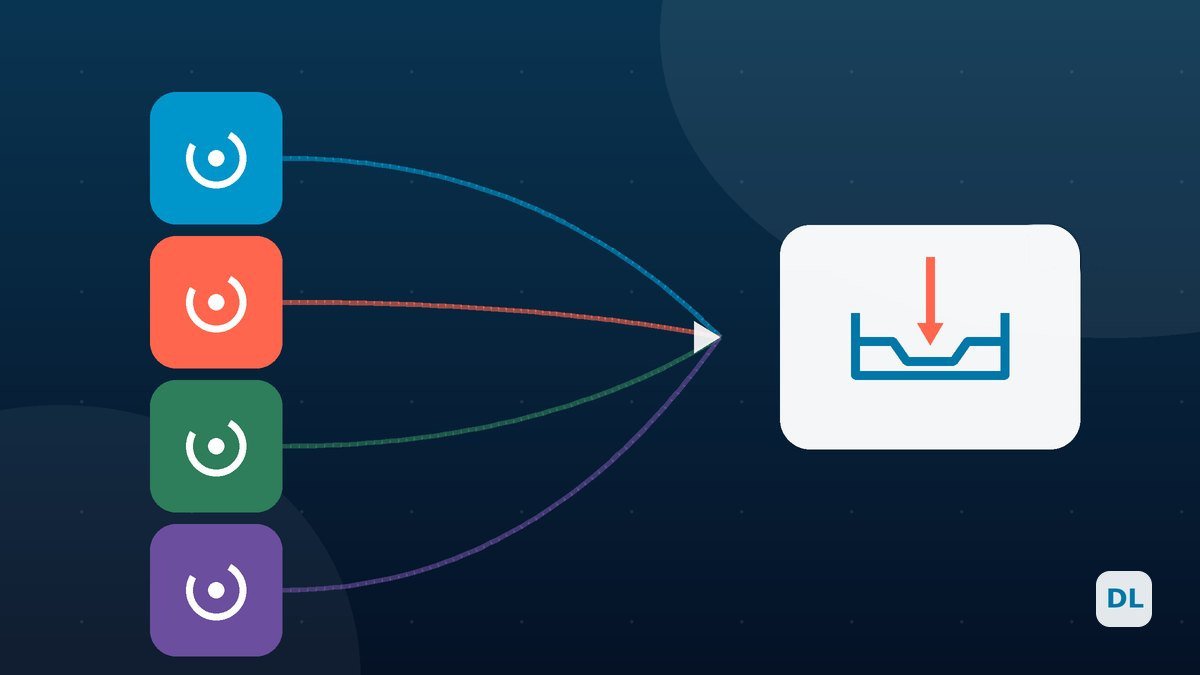
The fourth method changes the logic. Instead of going to fetch impressions on each platform, a universal inbox gathers them on its own. Whatever the scanner brand, the case lands in the same place. The platform then pushes it straight into your CAD tools and your ERP. One interface replaces the eight portals.
This is the approach DigiLab takes. The platform connects natively to the main clouds on the market, files each case by dentist and removes re-keying. The file does not simply arrive. It leaves again on its own toward production, for example as a project ready to open in Exocad, with no step in between. Status tracking and messages with the dentist happen in the same place, rather than spread across email, phone and sticky notes.
The benefit is not limited to time saved. By centralizing, you rebuild a full audit trail: who sent what, when, and where each case stands. To judge the multi-brand coverage for yourself, the DigiLab features page lists the scanners supported.
Since impressions are health data, hosting is dealt with head on. French regulation is explicit on the point, as the Agence du Numérique en Santé sets out. It rests on HDS certification, the French standard for hosting health data. DigiLab for its part claims up to one full-time equivalent saved per month and a start-up in under ten minutes. The initial investment is a change of habit. It pays back quickly once volume rises and brands multiply.
The four methods side by side
To decide, you have to hold the four methods to the same criteria. Four of them count day to day. The time spent each day collecting cases. The risk of errors and re-keying. The ability to handle several scanner brands. And compliance with the rules on health data. The table below sets them side by side, with no surprise: the more you automate and centralize, the more boxes you tick.
| Criterion | Manual portals | STL files by email | Point-to-point connectors | Universal inbox |
|---|---|---|---|---|
| Daily time | High | Medium | Low (brands covered) | Very low |
| Re-keying and errors | High | High | Reduced | Removed |
| Multi-brand | Manual | Universal but improvised | One connector per brand | Native, every brand |
| HDS / GDPR security | Varies by portal | At risk | Depends on the tool | Built for it |
| Ability to grow | Low | Low | Medium | High |
Choosing according to your laboratory
The right choice depends on your volume and on your mix of dentists. The more numerous and varied your impression sources, the more centralized automation pays. Three situations stand out. Most offers are priced per case produced, which lines the cost up with actual volume.
The small craft laboratory
With one or two dentists on the same brand, manufacturer portals are sometimes enough. The switch becomes worthwhile as soon as a third dentist arrives with another camera. As long as the sources stay uniform, the tooling effort does not pay for itself yet.
The growing laboratory
When the inbound flow diversifies, re-keying starts to cost real hours and real errors. This is the moment to weigh a universal inbox rather than stack up connectors. The arithmetic is simple: compare the hours spent each week collecting cases with the cost of a platform.
The multi-site laboratory or group
For a network of sites, only a centralized platform gives the visibility, the traceability and the HDS compliance expected at that scale. Manual methods no longer hold. Standardizing the flow also becomes an asset when practices have to be aligned across several teams.
FAQ
Can impressions really be collected automatically from every scanner?
Yes, provided you use a platform with multi-brand connectors. Manufacturer portals stay inside a single ecosystem; a universal inbox gathers the different clouds into one entry point.
Do you have to change CAD software to automate reception?
No. Centralization solutions fit into your existing chain. They push files to your CAD tools and your ERP, without forcing you to replace what already works.
Are digital impressions subject to HDS hosting?
An impression identifies a patient: it falls under health data. In France, hosting it has to go through a certified provider, a requirement set out by the HDS certification, which builds on the ISO 27001 standard.
How long does it take to set up a universal inbox?
Configuration is mostly a matter of connecting your existing scanner accounts. DigiLab claims a start-up in under ten minutes; allow a short adjustment period for the teams after that.
Conclusion
Collecting your impressions automatically is not about picking one more tool: it is about deciding where your technicians' time goes. Manual portals and email transfers show their limits quickly. Point-to-point connectors solve one brand at a time. The universal inbox is the only method designed for a multi-brand flow that lasts and stays compliant. It is for you to hold it against your real volume.
To see how every scanner can feed one flow, try DigiLab free: 100 cases on your own work.
The Digilab team
Centralise all your impressions in Digilab
One single inbox for every scanner your practices use