
The Dental Laboratory of Tomorrow: 5 Changes Already Visible in 2026
The Dental Laboratory of Tomorrow, episode 1 of 12
People like to picture the dental laboratory of the future full of robots. Studies published in 2025 and 2026 describe a more concrete shift. The laboratory receives its cases as files, automates part of its production and is also chosen for the quality of its service. Each of these five changes rests on a recent study, often from abroad. What remains is to see what they change for your laboratory.
In the dental laboratory of tomorrow, case reception, production and follow-up all run on files. The five changes described here all rest on data published in 2025 or 2026.
1. Cases arrive as files
The first change shows at the morning intake. According to NADL's 2025 survey, 47% of laboratories receive more than half of their cases as digital impressions. The American trade association surveyed 363 laboratories between July and September 2025.
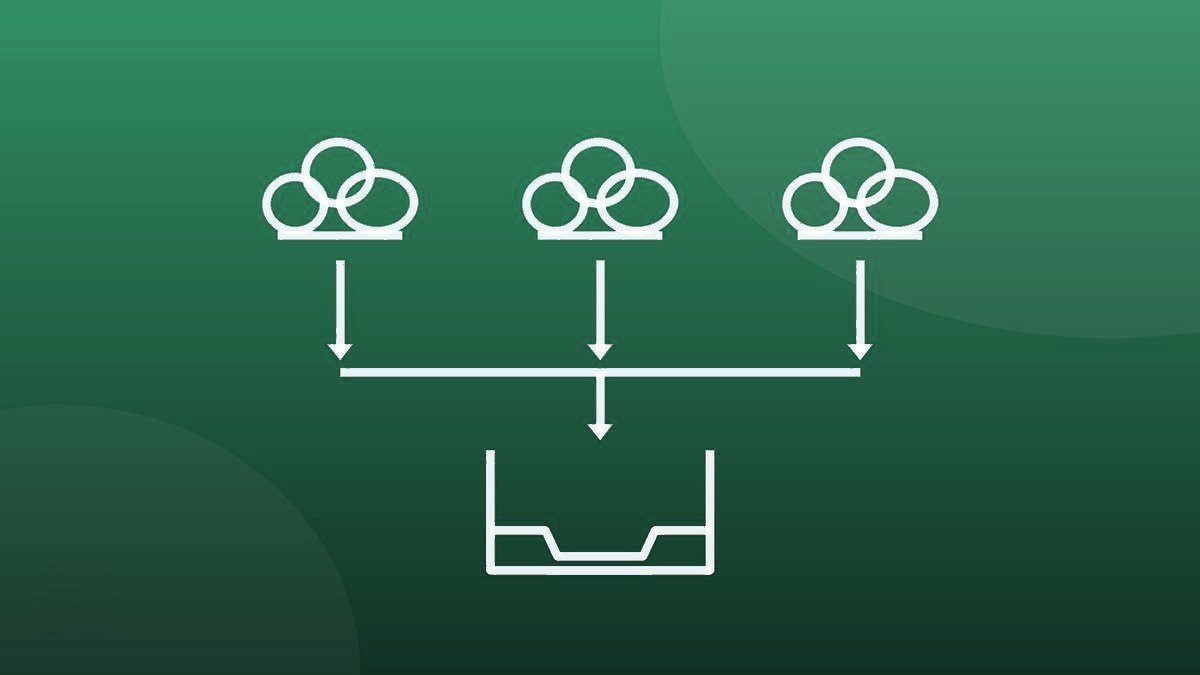
For these laboratories, the front door is no longer just the courier. It is the online platforms of the intraoral scanner manufacturers. Each dental practice chooses its scanner, and each scanner sends its files through its own platform. A laboratory working with twenty practices receives its cases through several doors at once.
These figures describe the American market. They do not carry over as they are to France: we found no French survey published in 2025 or 2026 that measures this share.
2. Case reception becomes a production step
The same survey shows that the share of laboratories producing at least 10 cases a day with 3D printing rose from 52% in 2019 to 67% in 2025, and that 27% produce at least 50. At that pace, case reception looks like a factory loading dock: when the parcels pile up, the whole line waits.
Receiving a digital case takes several steps. You log in, download, check that the file is complete, attach it to the right case record, then file it. Each step takes little time. Repeated fifty times a day, they end up taking a real place in the schedule.
In Germany, the consulting firm valantic reaches the same conclusion from another angle. In its analysis of the German dental laboratory market, it notes that centralized case management reduces errors. It adds that the digital workflow has become a way to keep clients. How a laboratory receives and follows its cases therefore counts in its relationship with dental practices.
3. Production automates
Third change: production automates. According to NADL, 72% of American laboratories use 3D printing in 2025. And 22% of the laboratories surveyed report having adopted some form of 3D printing automation over the past twelve months.
Automated production needs the right files to be ready, designed and validated at the right time. The bottleneck therefore moves upstream: case reception, sorting and file preparation. If the files arrive in disorder, the machines wait.
4. AI enters design, with caution
Artificial intelligence draws a lot of attention in dentistry. The scientific literature calls for nuance. A synthesis of eleven systematic reviews, accepted in December 2025 by the Journal of Prosthodontics, mapped the uses of AI in prosthodontics. It covers in particular preparation margin detection, design and shade selection.
Its authors conclude that AI proves most useful for recognizing and segmenting images. They point out that most of the evidence comes from early-stage studies and that clinical validation is still lacking. A systematic review published in February 2026 points the same way: AI is entering digital workflows as a decision support tool, not as a standalone system.
For a laboratory owner, the consequence is concrete. Today, AI assists the dental technician and works on the files it is given. A laboratory that files its cases well will be better placed to benefit from it.
5. Service to dental practices counts for more
The last change concerns the relationship with dental practices. The consulting firm valantic observes in Germany that digital readiness has become a condition of dentist loyalty. In the United Kingdom, Luminii Consulting puts the laboratory market at £900 million, with £1.3 billion expected by 2030. Luminii reports the vision of the European laboratory group Corus: by 2030, design teams will work remotely and some laboratories will be fully virtual.
In France, the context is tighter. Before the French Senate on November 27, 2025, the president of UNPPD, the French employers' union for dental technicians, stated that 800 companies out of 3,800 had disappeared in two years, according to Dentaire365. In a shrinking market, the service a laboratory gives a dental practice comes down to simple points:
- knowing where a case stands without having to call;
- getting a delivery date and seeing it kept;
- getting a quick answer when a file is missing;
- sending cases easily, whatever the scanner.
What you can do now
Three steps are enough to see where your laboratory stands, without buying any tool.
1. For one week, note every platform you open to collect cases, and the time spent each morning before starting the first one. 2. Set a shared naming rule: case reference, dental practice and date. Never use the patient's name. 3. On twenty cases, note the time the file arrives and the time design starts.
Digilab, the first step toward the laboratory of tomorrow
The laboratory of tomorrow starts at its front door. Digilab gathers in a single inbox the digital impressions that dental practices send from the various scanner platforms. Each file is attached to its case, then made available where you work: in your folders, in your design software or in your lab management system. Data is entrusted to a host certified for health data (HDS, the French standard for hosting health data), and dental practices follow their cases on a portal in your colors.
Digilab replaces neither the scanners nor their manufacturers' platforms. It sits above them, so that the laboratory has only one door left to open.
Frequently asked questions
What is a digital dental laboratory?
It is a laboratory that receives, designs and follows its cases from files: digital impressions, computer-aided design, manufacturing by milling or 3D printing. The level of equipment varies widely from one laboratory to another. What matters is continuity between these steps.
Do you have to go digital all at once?
No. The simplest approach is to start with case reception, where the files come in, then move forward step by step. Measuring the time spent at each step helps choose the next one.
Will artificial intelligence replace the dental technician?
The two reviews cited above, published in 2026, present AI as a decision support tool. They stress that the evidence is still early and that clinical validation is lacking. The dental technician's know-how remains at the center of design.
Where to start when you receive impressions from several scanners?
List the platforms and accounts you use. Then set collection times and a shared naming rule. Episode 2 of the series details this routine.
What comes next in the series
The five changes described here have one thing in common: they all run through files. Every Tuesday, the series "The Dental Laboratory of Tomorrow" looks closer at one of these topics and turns it into concrete steps. Next episode on October 20: how many portals do you open every morning?
Try Digilab free to centralize the reception of your digital impressions: up to 100 cases included for 14 days.
Sources
- NADL, Greg Drevenstedt, "Three Out of Four Labs Now Use 3D Printers: New Results from NADL's Dental Technology Survey", Journal of Dental Technology, 2025: cases originating from intraoral scans (47%), daily 3D printing output (67% at least 10 cases, 27% at least 50), use of 3D printing (72%) and automation (22%). Survey of 363 laboratories, July 14 to September 2, 2025.
- valantic, "German dental laboratory market": centralized case management, digital workflow and dentist loyalty in Germany.
- Alfaraj et al., "Harnessing AI in prosthodontics and implant dentistry: an umbrella review of systematic evidence", Journal of Prosthodontics, accepted December 16, 2025, published January 14, 2026: uses of AI in prosthodontics and level of evidence.
- Karvekar et al., "Digital Dentistry and Artificial Intelligence: A Systematic Review on Innovations in Diagnosis, Treatment Planning, and Prosthodontics", Cureus, published February 27, 2026: AI as a decision support tool in digital workflows.
- Luminii Consulting, "UK Dental Lab Market Enters New Era as Technology and Investment Reshape the Industry", February 20, 2026: size of the UK market (Eclipse CF estimate cited by Luminii) and the Corus group's 2030 vision.
- Dentaire365, "L'alerte de l'union patronale des prothésistes dentaires sur la concurrence étrangère", December 2, 2025: statement by the UNPPD president before the French Senate on November 27, 2025.
The Digilab team
Centralise all your impressions in Digilab
One single inbox for every scanner your practices use