
Bringing Every Scanner's Digital Impressions Into One Inbox: Why and How
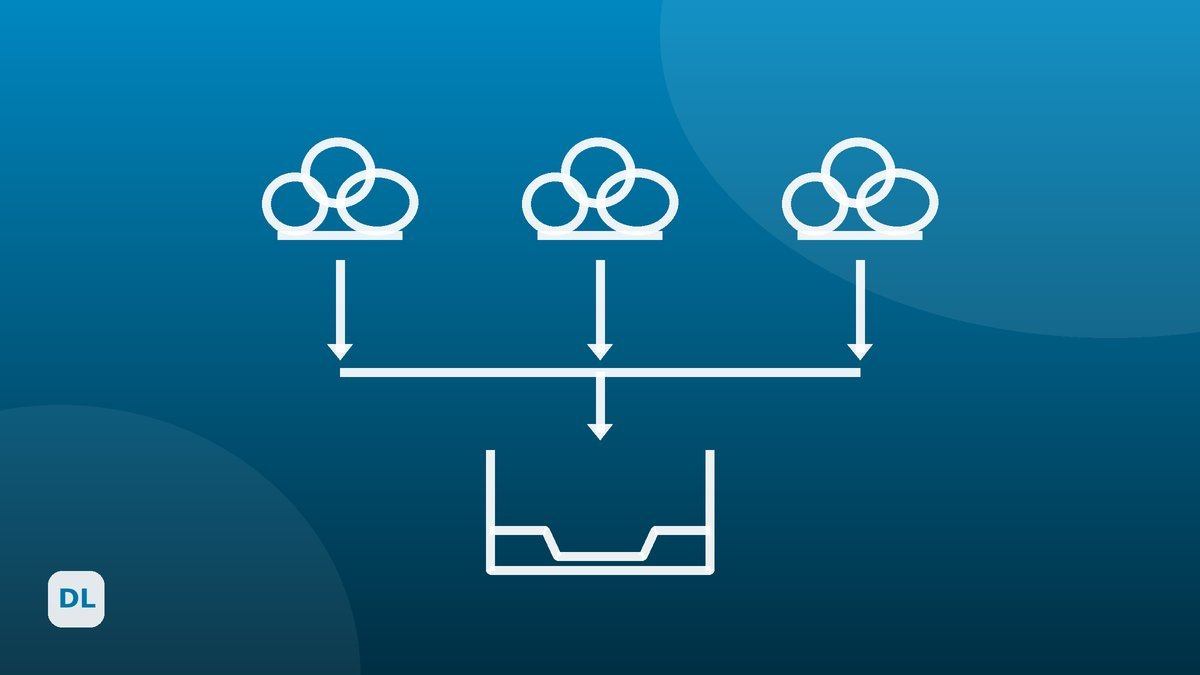
A laboratory working with several practices soon receives impressions from different brands. Each scanner pushes its files to its own manufacturer cloud. Centralizing multi-scanner digital impressions means bringing all those streams into a single inbox, before they move on to CAD. Here is why the juggling becomes untenable, and how a universal inbox settles it.
The multi-cloud problem when impressions arrive from everywhere
A laboratory working with several practices does not choose its dentists' scanners. Each practice has its own, and every intraoral scanner pushes its files to its own manufacturer's cloud. So the technician has to log in to each portal to find the day's case.
An active laboratory handles dozens of cases a day, spread across several portals to watch. Each brand adds its password, its interface and its navigation habits. Time spent hunting for a file produces no restoration.
The problem worsens over time, whatever the volume handled. According to Mordor Intelligence, the intraoral scanner market is growing at around 11% a year over 2026-2031. More brands in circulation means more clouds to check every morning.
The sector is consolidating in parallel. According to l'Information Dentaire, France counts close to 3,600 laboratories for 18,100 people working in them. The structures absorbing that volume can no longer lose time on the mere reception of impressions.
That situation is already set out in the complete digital workflow of a dental laboratory. One precise question remains: how do you bring those streams back to one place, without changing the practices' scanners or the team's habits?
The cost of the juggling usually stays invisible in the laboratory's dashboards. A case forgotten on a cloud nobody checked delays a delivery, without anyone always knowing why. Nobody measures the time spent switching from one portal to another, even though it adds up every day.
What a universal inbox for digital impressions is
A universal inbox for digital impressions is a single interface that receives the scans sent from every manufacturer cloud. It does not replace the scanners or the dentists who use them. It picks the files up as soon as they are available, wherever they arrive.
In practical terms, the laboratory opens one work list. Each case appears there with its origin, its status and its date of reception. And it is not the impression alone that arrives: it comes with its lab prescription, the dentist, the patient reference, the instructions, the whole content of the digital case. It makes no difference whether the practice scanned with Medit, iTero, 3Shape or another manufacturer on the market.
Centralizing multi-scanner digital impressions this way changes the nature of the administrative work. The technician no longer has to guess which portal holds the file. They consult a single queue, sorted by order of arrival or by production priority.
DigiLab announces an inbox that brings together up to 9 scanners on the market in one interface. The idea stays the same whichever vendor the laboratory chooses. One entry point for receiving, not eight portals to open every morning.
Centralized reception is often only a first level of use. Once the cases are gathered, the laboratory can add production tracking to them. Each case keeps a status, with shared messaging for exchanges with the dentist. Some laboratories go further still, connecting the inbox directly to their ERP through an API, to run scanners and production from one system.
How centralizing works technically: connectors and push to CAD/ERP
Technically, centralizing rests on connectors plugged into each manufacturer cloud. A software bridge fetches the new cases, brand by brand, then brings them back into the laboratory's inbox. The principle already exists between sector tools: some solutions can feed one cloud's cases into the laboratory's management system.
Each manufacturer handles export in its own way, and the differences are real. Medit Link, for instance, receives cases from the brand's own scanners. Its export to Exocad is direct, with the .dentalProject file carrying the whole case. Toward 3Shape Dental System, only the impressions travel: the laboratory rebuilds the case itself, element by element. MyiTero for its part offers unlimited storage and direct reception of scans into Exocad.
Other manufacturers follow a nearby logic, more open than closed. Shining3D exports files in STL, OBJ or PLY and pushes them straight to Exocad from the Aoralscan 3. Dexis, through its Quick Connect network, transfers STL, PLY and OBJ files as well as the xOrder and .dentalProject formats with no restriction.
3Shape Communicate follows a different logic, more closed on export. It does carry cases, but working with them requires a 3Shape Dental System or Unite license and the STL export option enabled on the dongle. Without it, the laboratory can view the impression without being able to retrieve it.
| Manufacturer cloud | Export offered | Connection to CAD |
|---|---|---|
| Medit Link | STL, PLY, OBJ, .dentalProject to Exocad | Direct (Medit scanners only) |
| MyiTero | Native scans | Direct into Exocad |
| Shining3D (Aoralscan 3) | STL / OBJ / PLY | Direct to Exocad |
| Dexis (Quick Connect) | STL / PLY / OBJ / xOrder / .dentalProject | No proprietary restriction |
| 3Shape Communicate | Messages, viewing | 3Shape license required |
Once the files are brought back, the universal inbox pushes them to the laboratory's CAD software or ERP. Exocad, Logidents and MIA Soft are the most common targets today, and the list is widening with tools such as AI4Dental or Relu. The technician finds the complete case, ready to open in their design software, without having to rebuild it.
The mechanism rests on standard cloud building blocks. A webhook notifies the inbox as soon as a new scan is available, and an API token secures access to the laboratory's account. For a deeper integration, an open API makes it possible to connect the inbox directly to your own ERP, rather than depending only on the interface supplied by default.
What centralizing changes day to day for production
Centralizing does not only change how files are received. It transforms how production is run day to day. A laboratory manager consulting a single inbox sees at a glance what has just arrived. They also see what is waiting, and what has to go into manufacturing.
The gain shows above all on repetitive tasks. Hunting for a file on the wrong portal, downloading it again, renaming it before opening it in the CAD software: all repeated gestures. They disappear when everything arrives in the same place. One laboratory software vendor points out that management software helps automate case handling. It also makes production planning and stock control easier. Fewer repeated manual gestures also means fewer chances to pick the wrong case reference. That matters when the laboratory handles dozens of cases a day.
Take a laboratory receiving cases from five different practices on a Monday morning. Without centralization, the technician opens five portals before knowing what to produce that day. With a universal inbox, the same information fits on one screen, already sorted by manufacturing priority.
In concrete terms, centralizing changes three things day to day:
Reception time: no more logging in to each manufacturer portal one after another.
Error risk: less manual re-keying of case references.
Visibility: one status per case, from the scan received to the restoration delivered.
DigiLab states that a laboratory centralizing its impressions saves the equivalent of one full-time position per month on reception and re-keying tasks. That time goes back into production rather than into watching manufacturer clouds. For a production manager, it also means fewer calls to the practice to track down a lost case.
Security and compliance for centralized impressions
A digital impression is health data. Centralizing it does not remove the duty to protect it, quite the opposite. Bringing the streams into one inbox also concentrates the security responsibility on a single point.
In France, hosting health data means going through an HDS-certified provider, as the Agence du Numérique en Santé sets out. That obligation comes from article L.1111-8 of the Code de la santé publique, the French public health code. It applies whatever reception tool the laboratory chooses.
HDS certification is not improvised either. It builds on the ISO 27001 standard, which governs information security management. A laboratory choosing a universal inbox has to check that framework, not only the vendor's commercial promise.
DigiLab puts forward HDS hosting in France and medical-grade encryption. Centralizing brings an added benefit here: a single point of access control, instead of several manufacturer clouds with differing policies. The GDPR applies the same way, whatever the number of scanners connected to the inbox.
The two frameworks are not the same. The GDPR governs the processing of personal data in general, in France as in the rest of the European Union. HDS hosting specifically covers health data stored on French territory. A universal inbox handling impressions has to answer to both, not to one at the expense of the other.
How to put a universal inbox in place in your laboratory
Adopting a universal inbox requires changing neither your dentists' scanners nor your CAD software. The inbox plugs in between the two, replacing nothing on the practice side or on the laboratory's production side.
Putting it in place usually follows a simple path:
List the scanner brands used by the laboratory's partner practices.
Check the connectors to the CAD software or ERP already in place: Exocad, Logidents, MIA Soft, or recent tools such as AI4Dental and Relu.
Test reception on a few real cases before switching the whole daily flow.
Train the team on the new inbox, which handles much like an ordinary email client.
DigiLab announces a start-up in under 10 minutes, with no specific development on the laboratory side. The free trial of 100 cases over 14 days lets you check compatibility with the scanners your practices actually use. For a multi-site laboratory, each site can be connected progressively, without interrupting production under way.
The switch is rarely made all at once. Most laboratories keep the old portals open for a while, long enough to check that every case does arrive in the new inbox. Once confidence is established, the team drops the manual logins naturally, practice after practice.
FAQ
What is a universal inbox for digital impressions?
It is a single interface that receives the scans sent from every manufacturer cloud your practices use. It replaces watching several portals with one work list, sorted by case. The technician consults one entry point instead of several separate accounts.
Do you have to change scanner to use a universal inbox?
No. The inbox plugs into the existing clouds, whatever scanner brand the practice uses. The laboratory asks nothing new of the dentists sending it cases. Only reception changes, not the impression-taking equipment.
Does a universal inbox replace the laboratory's CAD software?
No. The inbox pushes the files received to the CAD software or ERP already in use: Exocad, Logidents, MIA Soft, or tools such as AI4Dental and Relu. The aim is to connect reception to the existing tool, not to replace it with another.
How do you secure centralized impressions coming from several manufacturer clouds?
In France, hosting health data has to go through an HDS-certified provider, building on the ISO 27001 standard. A serious universal inbox applies that framework, with encryption and an access audit trail. Check that point before choosing a vendor.
Conclusion
Centralizing the impressions from all your dentists' scanners is not one more convenience. It is a change in the way a laboratory receives, checks and starts its production every day. Multi-cloud costs time and errors. The universal inbox brings everything back to one place, connected to your CAD software.
The question is no longer whether your dentists will keep using different scanners. They already do, and it will be truer still tomorrow. The real question is where, in your laboratory, the reception of those files ends.
Want to test a universal inbox on your own cases? Try DigiLab free with 100 cases over 14 days, no commitment. The detail of the features and available connectors sets out what plugs into your dentists' scanners and your CAD software.
The Digilab team
Centralise all your impressions in Digilab
One single inbox for every scanner your practices use